Most losing players think they need better cards. Most winning players know they need better data. Holdem Manager has been one of the main tools for that job for years, giving online poker players a way to track results, review hands, and spot patterns that stay invisible during a session.
If you play enough volume to care about win rate, table selection, positional leaks, or whether your red line is falling off a cliff, this software matters. If you mostly jump into a few casual sessions a week, it might not. That distinction is the whole point.
What Holdem Manager actually does
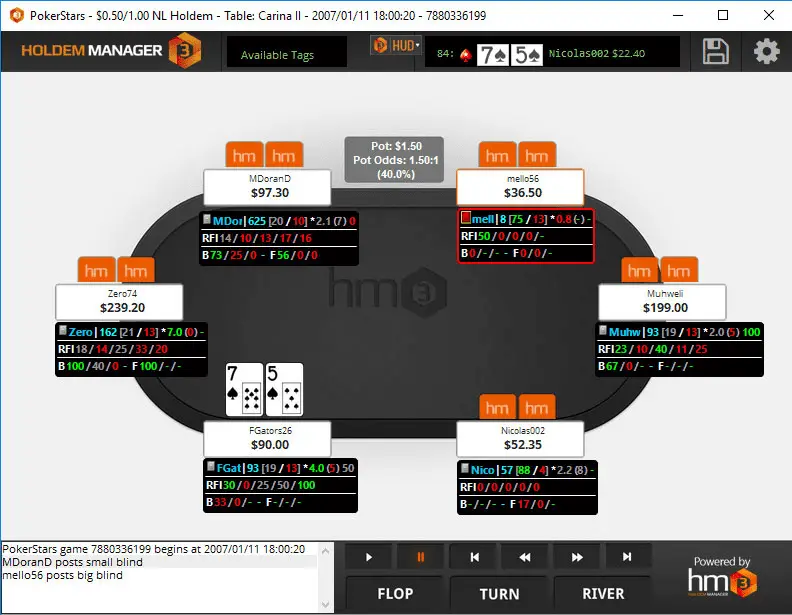
At its core, Holdem Manager imports your hand histories and turns them into usable information. It tracks your results by game type, stake, position, opponent, and session. More importantly, it gives you a HUD, or heads-up display, that places opponent stats directly on the table while you play.
That changes decision-making fast. Instead of guessing whether a player is genuinely aggressive or just ran hot for one orbit, you can look at real tendencies. VPIP, PFR, 3-bet rate, fold to c-bet, steal frequency, and showdown stats help you build a much sharper picture of who you are actually playing against.
For grinders, the real value often shows up away from the table. Post-session review is where Holdem Manager earns its keep. You can filter for specific spots, isolate your worst-performing lines, and compare assumptions against actual results. That is how small leaks stop draining a bankroll month after month.
Where Holdem Manager still gives players an edge
The biggest edge comes from volume. The more hands you play, the more useful your database becomes. A player putting in steady cash game volume or multi-tabling tournaments can get serious value from trend analysis that would be impossible to track manually.
It also helps players separate bad variance from bad play. That matters more than most people admit. Plenty of players make strategy changes because of a rough week, when the real issue is simply short-term runout. Others blame variance when their data clearly shows they are bleeding from the blinds or punting in 3-bet pots. Holdem Manager gives you a better standard for judging your own game.
The HUD is another clear advantage, but only when the poker site allows it. On sites where tracking software is permitted, real-time stats can improve everything from preflop steals to river hero calls. On sites with restrictions, that edge disappears, which lowers the software’s immediate value.
Holdem Manager is not for every player
This is where many software reviews get lazy. Holdem Manager is useful, but it is not automatic profit.
First, there is a learning curve. A HUD full of numbers means nothing if you do not know what sample size matters or how to adjust to different pool tendencies. Bad players can misuse stats just as easily as good players can use them well.
Second, your site matters. Some US-facing poker rooms support hand tracking better than others, and some limit or ban HUD functionality entirely. Before paying for software, make sure the rooms you actually play on are compatible with the features you want. There is no edge in buying a tool that cannot operate properly in your regular games.
Third, player pool softness matters. In very soft games, simple fundamentals often beat data-heavy decision-making. If your opponents are making obvious mistakes, you may not need a deep software stack to win. But once games get tougher, especially in reg-heavy environments, study tools become much more important.
Holdem Manager vs just reviewing manually
Manual review has value. You should still mark hands, think through ranges, and examine key mistakes without relying on software to do all the thinking for you. But manual review breaks down once your sample gets large.
That is the real case for Holdem Manager. It scales. It can show you whether your cutoff opens are profitable over thousands of hands, whether your continuation bets print money or burn money, and which player types are giving you trouble. You are not working from memory. You are working from evidence.
For serious recreational players, that can be the difference between staying breakeven and becoming consistently profitable. For semi-pro grinders, it is part of the baseline toolkit.
Should you use Holdem Manager in 2026?
If you play meaningful volume, care about long-term improvement, and compete on sites where tracking tools are allowed, yes. Holdem Manager is still worth serious consideration. It remains one of the clearest ways to turn raw hand histories into decisions that protect bankroll and improve win rate.
If you are still choosing where to play, software compatibility should be part of that decision. A poker room with decent traffic and soft games is good. A poker room with decent traffic, soft games, reliable cashouts, and support for the tools you use to improve is better. That is the kind of filter Poker Profit pushes because platform choice affects earning potential just as much as strategy does.
The bottom line is simple: Holdem Manager is best for players who treat poker like a performance game, not just a pastime. If that is how you approach online poker, playing without data is usually the bigger mistake.