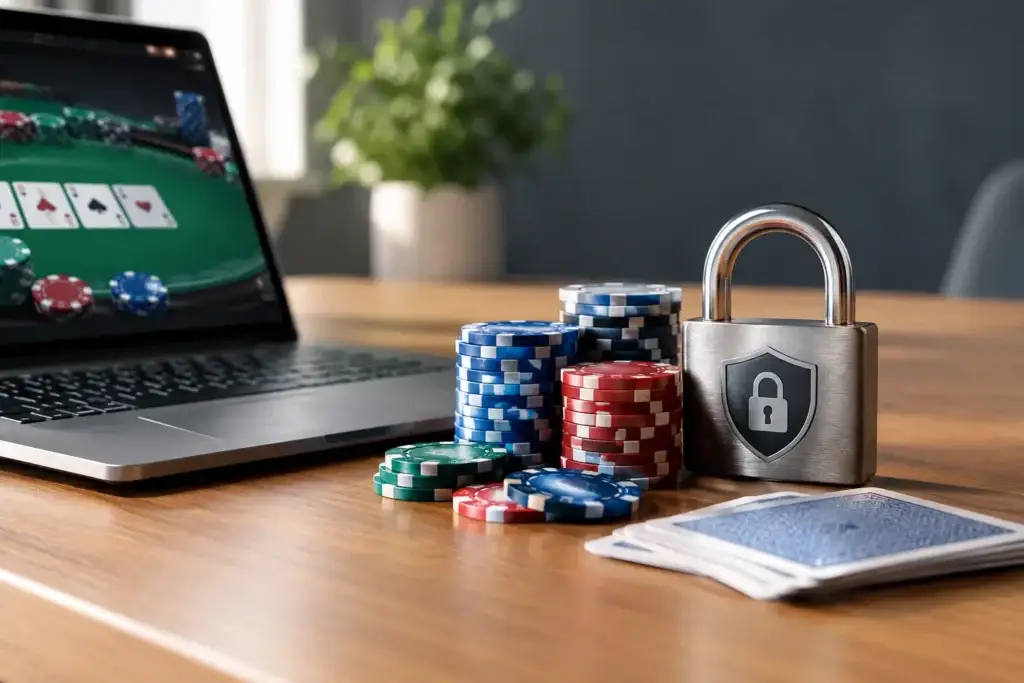
A poker room can look fine right up until the moment you need a withdrawal, a password reset, or support for a locked account. That is why a real money poker security guide should start before the first deposit, not after a problem hits your bankroll. Security is not just about avoiding scams. It is about choosing a room that treats player funds, fair games, and account access as operational priorities.
For serious recreational players and grinders, the goal is simple: keep your money available, keep your account under your control, and avoid platforms where unanswered questions become expensive delays. No poker room is risk-free, especially in the US-facing offshore market, but you can sharply improve your position by knowing what to check.
Real Money Poker Security Guide: Start With the Poker Room
The biggest security decision is site selection. A clean lobby, a big welcome bonus, and a flashy tournament schedule do not prove a room is dependable. Look at the factors that affect players when it is time to play, cash out, or resolve a dispute.
A credible room should have an established operating history, consistent player traffic, visible game volume, and a support system that can handle real account issues. Traffic matters for more than table selection. Active networks have more to lose from weak game integrity and are under greater pressure to maintain stable cashier systems, tournament schedules, and player confidence.
Do not confuse a license badge with a full guarantee. Licensing standards vary by jurisdiction, and offshore poker rooms accessible to US players operate under a different framework than state-regulated rooms. Treat licensing as one data point. Pair it with a long operating record, current player feedback, known withdrawal methods, and evidence that the site actually pays players on a reasonable timeline.
A room with the largest advertised bonus is not automatically the best bankroll home. If the bonus clears slowly, the games are thin, and withdrawals are unreliable, the value disappears fast. Poker Profit evaluates rooms through practical player outcomes: traffic quality, softness, tournament value, rewards, usability, and payout reliability. That is the right order of priorities.
Check the cashier before you deposit
Review deposit and withdrawal options before sitting in a cash game or registering a tournament. You want to know which methods are currently available, whether the room requires identity verification before cashing out, and whether withdrawal limits apply.
Verification is not necessarily a red flag. In fact, a room that asks for reasonable identity documents can be protecting itself and its player pool from fraud. The issue is whether requirements are clear and whether the process is consistent. A poker room should explain what it needs, why it needs it, and how long review normally takes.
Use a payment method you control directly. Avoid depositing through third-party accounts, buying crypto from strangers to fund a poker balance, or letting another player handle your cashout. These shortcuts create a trail that can make verification harder and give the room a legitimate reason to freeze funds while it investigates.
Keep records of deposits, withdrawals, confirmation emails, transaction IDs, and support conversations. This is not paranoia. When a payment is delayed, exact dates and reference numbers get better results than vague messages about missing money.
Protect the Account That Holds Your Bankroll
Most account compromises do not begin with a sophisticated attack on the poker room. They begin with a reused password, a fake support message, or a player logging in through an unsafe device.
Use a unique, long password for every poker room. A password manager is the practical solution because it lets you use strong credentials without relying on memory. If a poker site offers two-factor authentication, turn it on immediately. An authenticator app is generally stronger than text-message verification, but either is better than password-only access.
Your email account deserves the same level of protection. It is the recovery point for poker passwords, cashier notices, and identity verification requests. Secure it with a unique password and two-factor authentication. If someone controls your email, they may be able to reset your poker account before you notice.
Do not log in from public Wi-Fi unless you have a reliable way to protect that connection. Hotel, airport, and coffee shop networks are poor places to access a cashier, upload documents, or request a withdrawal. The risk is not worth saving five minutes.
Keep your phone and computer updated, use screen locks, and never save poker passwords on a shared device. If you use a roommate’s laptop or a public computer, assume that device is not safe enough for financial activity.
Spot Phishing Before It Costs You
Poker players are common phishing targets because a fake message about an account review, bonus expiration, or withdrawal problem can create instant urgency. The attacker wants you to click first and think second.
Real support teams may contact you, but you should never rely on the message itself as proof. Instead, open the poker client or manually type the site address into your browser and check your account there. Do not use a login link from an unsolicited email, text, social media message, or chat app.
Be especially skeptical when a message demands an immediate deposit to unlock a withdrawal, asks for your password, or requests identity documents through an unfamiliar channel. Legitimate verification can be inconvenient, but a reputable room will not need your password, seed phrase, or remote access to your device.
Support imposters also operate in social media comments and private groups. A profile with a poker room logo is not customer service. Use the official support route inside the room or its verified help center.
Fair Games Matter as Much as Safe Payments
A secure poker room protects both account balances and game integrity. You cannot prove every opponent is playing honestly from one bad session, but you can evaluate whether the operator takes obvious integrity risks seriously.
Look for clear rules on bots, real-time assistance, multi-accounting, collusion, and prohibited software. Strong policy language is only a starting point. What matters is whether the room has a process for reporting suspicious behavior and a history of responding to credible reports.
Game integrity concerns deserve a measured approach. A bad run, an aggressive regular, or an unusual hand history is not proof of cheating. Start by saving hand histories and identifying a specific pattern: repeated synchronized play, impossible account overlap, suspiciously similar betting lines, or behavior that suggests shared information.
Then report facts rather than accusations. Include screen names, table names, dates, tournament IDs, and relevant hands. A useful report gives the integrity team something it can investigate. Publicly naming alleged cheaters without evidence rarely helps and can distract from the real issue.
Know the Red Flags That Should Stop a Deposit
Some warning signs call for caution. Others should end the evaluation immediately. Walk away if you encounter several of these issues at once:
- Withdrawal terms that are vague, constantly changing, or impossible to locate.
- Support that cannot explain a delayed cashout or gives conflicting answers across channels.
- Pressure to deposit through personal wallets, unofficial agents, or private messaging accounts.
- Promotions that promise unrealistic returns while hiding high rollover requirements.
- A lobby with little real activity despite claims of massive traffic and guaranteed events.
- Repeated player reports of confiscated balances without a clear, documented explanation from the room.
One complaint on a forum does not settle the question. Every established room will have unhappy players, including players who violated terms or failed verification. The pattern matters. When the same withdrawal, support, or fairness complaint appears repeatedly over time, assume it may eventually affect you too.
Manage Your Own Risk Inside the Room
Even a solid poker site cannot protect a bankroll from poor personal controls. Keep only the amount you need for your normal playing schedule on the platform. For many players, that means a working bankroll rather than every dollar allocated to poker.
Cash out periodically instead of letting a large balance sit indefinitely. The right frequency depends on your volume, preferred withdrawal method, and whether you are building a bankroll for higher stakes. Still, regular withdrawals test the cashier process and reduce exposure if an account issue occurs later.
Read the room’s rules on bonuses, account sharing, location restrictions, prohibited tools, and multiple accounts. Violating terms accidentally can create the same headache as an actual security problem. Do not lend your account, play on another person’s account, or try to bypass location or identity checks.
If a poker room freezes your account, stay calm and document everything. Contact official support, provide only requested documents through approved channels, and keep a complete record of the case. Angry messages may feel justified, but concise facts and a clean paper trail give you the strongest position.
Your best edge starts before the cards are dealt. Choose rooms with a record of fair games and reliable payouts, secure your account like it contains the bankroll it does, and never let urgency push you into a bad decision.